One number to call
Paper wasps, hornets or yellow jackets: same line.
Wasp nest follow-up in Lewisville, TX is the return check that confirms earlier work held and catches new nests before they grow. Paper wasps often rebuild near an old nest site. The referral line puts callers in touch with an independent local provider who works on houses, townhomes and apartments across the city. If wasps are back under the eaves, call and say where.
Paper wasps, hornets or yellow jackets: same line.
The provider confirms what is nesting before treating.
Routed to a provider that works in your ZIP code.
Look the company up on TDA’s license list.
A typical return visit pairs a fresh look at old nest sites with treatment of any new activity. Find out what the visit covers and what is billed on top.
The provider goes back to where the first nest was, then checks nearby eaves, soffits, porch ceilings, railings, garage corners and shed overhangs. A few providers add a thermal camera for wall nests; ask whether yours does and how it confirms what it shows.
Any nest still active, or a new one started since the last visit, is treated at the nest. Check the provider on the Texas Department of Agriculture's current-license lists. Ask which spots stay covered if the wasps return to them.
Once a nest is inactive, the provider can knock down or remove what can be reached safely. Ask whether old nests are taken away and who handles the ones up high.
Ask for written notes listing which nests turned up, where they were, what was treated and whether another visit makes sense. Renters and managers often keep these with repair records.
Every provider sets its own return-visit terms. Ask how long any coverage runs, which parts of the property it includes, what counts as new activity, and whether a fresh nest in a different spot is handled the same way. Terms are the provider's to set, not this site's, so have them written down.
Describe the nest and where it is, and a local provider explains the next step.
In Lewisville, wasp nest follow-up is a return visit that checks whether earlier work held and deals with any nest that survived or started since. Timing depends on the insect and the season: a look a few days after a yellowjacket treatment, or a spring check of eaves where paper wasps nested last year. A typical visit covers old nest sites, nearby overhangs and any new activity. Ask how long it will take.
Return checks matter because wasps come back to familiar places. Texas A&M AgriLife says paper wasp colonies are founded in spring by queens that spent the winter in sheltered spots, often in the same general location as the previous season's nest. A colony treated in summer can also have foragers out while the work is done. Calls about returning wasps, from Old Town and Vista Ridge Estates to the Lewisville part of 75077, are routed to an independent local provider.
Before the return trip the provider usually explains what to do: keep children and pets inside, leave any old nest alone, and note where and when you have seen wasps. Photos taken from a safe distance help, so keep them handy. Ask for any instructions in writing so nothing gets skipped.
The provider starts at the old nest site, then moves around the building: eaves, soffits, porch ceilings, railings, play sets, garage corners and shed overhangs. Ground spots where yellowjackets were active get a look too. A few providers use a thermal camera for wall nests, so ask. Active spots are usually pointed out so you know where wasps are still present.
Nests still active, or new ones, are treated at the nest. If the first approach did not work, the provider may change method. Ask how long to keep clear of treated spots and when the area can be used again.
Inactive nests within reach are knocked down or removed, which makes a new one easier to spot later. AgriLife notes abandoned yellowjacket nests are not reused, but paper wasps often build again nearby. Ask how often to look up at the old site, what a new nest looks like, and when to send the provider a photo.
As the visit wraps up, ask for written notes on what turned up and what was treated, plus whether another trip is advised. Large lots, several outbuildings and shared buildings can need more than one return. Find out who makes that call and whether extra trips fall under the terms already agreed.
Protective suits, veils and gloves let the provider get close to an active nest more safely. A homeowner on a ladder without that gear is at real risk.
Some providers use a thermal camera when a wall may still hold an active colony. Ask how the result is confirmed.
A nest that survived the first visit is treated again at its opening. If the first method did not hold, a different one may be used.
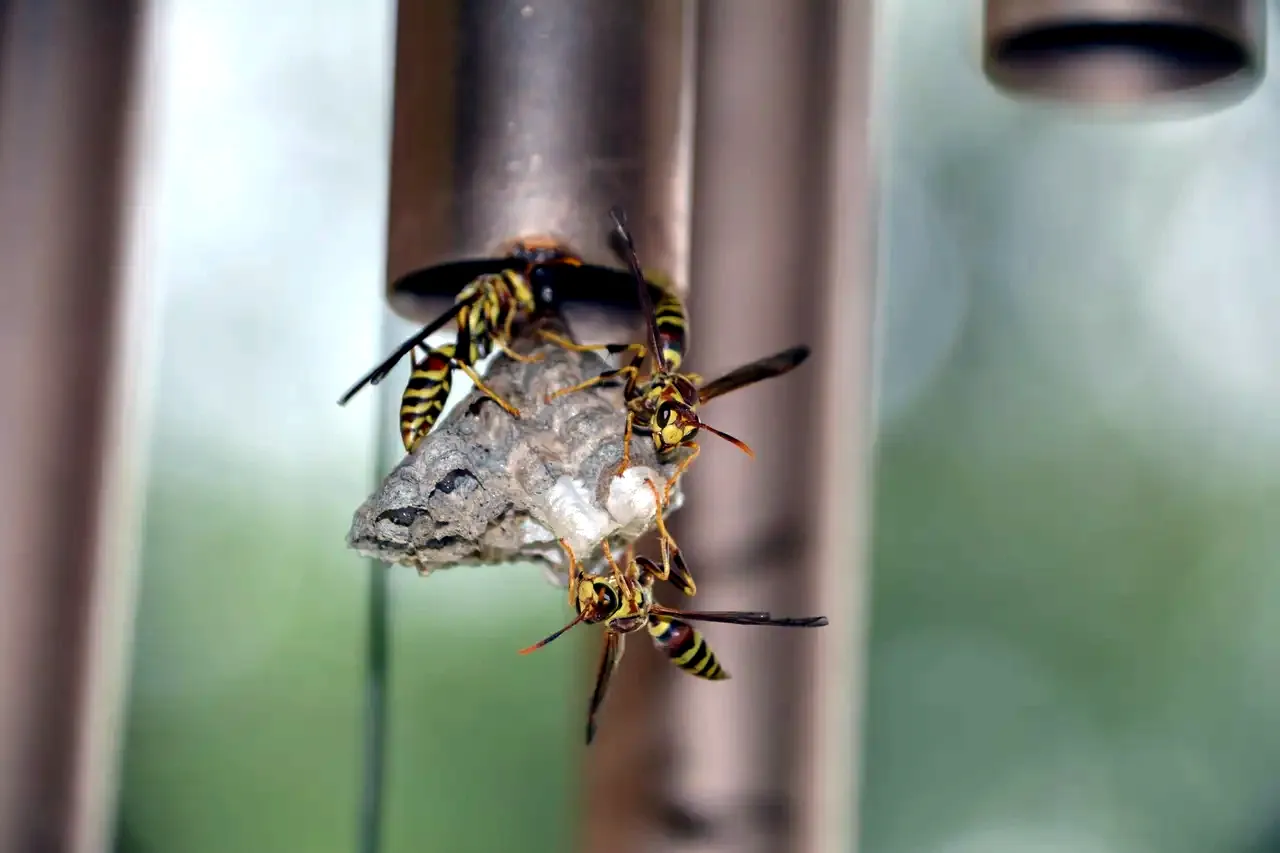
Paper wasp nests are typically found under eaves, the Texas Apiary Inspection Service notes. The provider checks every overhang, soffit and porch ceiling, including the far side.
Watching from a distance shows whether wasps are still flying into an old opening. Steady traffic means an active colony; a few strays usually do not.
Once a nest is dead, removing it clears the spot and makes a new nest easier to see. Ask whether the provider takes old nests away and how high ones are handled.
Paper wasps also build in garages, sheds and shrubbery. A return check covers outbuildings, swing sets and fence corners, where a new nest can grow unnoticed.
A careful provider works around the building in order, starting at the old nest, then moving through overhangs, outbuildings and the yard. Each find is checked up close so empty old comb is not mistaken for a new nest. Ask how long the re-check takes and what it includes.
Once a wall or soffit colony is dead, closing the gap it used makes a new colony less likely to move in. AgriLife advises against sealing a wall-void entrance before the colony has been eliminated, so ask the provider when each opening can be closed.
Paper wasp colonies are founded in spring by queens that overwintered in sheltered spots. A spring check of the eaves and outbuildings finds the small first nests before they grow. Ask when to book it.
Note the date and spot whenever you see a new nest or steady traffic, and take a photo from a safe distance. Ask how long to keep watching and what kind of activity calls for another visit.
Calls like this are common. The provider usually rechecks the balcony and, with the owner's agreement, the units nearby, then works out whether this is a surviving colony or a new nest. Active nests are treated and old ones removed where reachable. A dated note from the visit gives the tenant and manager one shared account of it. A new nest does not always mean the first visit failed, but report it in writing right away.
A few returning foragers can hover near the opening for a short time, but steady traffic in and out suggests the colony is still active. The provider checks the site, watches the opening and treats again if needed. Ask whether the ground nest can be opened once it is dead, and how long to keep the marker in place. Keep children and pets away from the spot in the meantime.
A standalone check before moving day can cover eaves, porch ceilings, the garage, any shed and the play set the last owners left behind. If nests turn up, the provider can explain options before boxes start coming through the door. If not, a spring look is worth booking, since paper wasp queens often return to the same general area. Watch the doorways and the garage during the first warm weeks.
The provider can schedule a walk-around and write down the date, the areas covered and anything that turned up. If nests turn up, treatment and removal come before the lease starts. That record goes into the rental file. A check only reflects the day it happens, so ask what the new tenant should watch for in spring and late summer.
Return visits in Lewisville follow the shape of its housing. Its 54,237 housing units have a median build year of 1997, with 14.3 percent older than 1980 and 23.1 percent from 2010 on. Renters occupy 53.7 percent of homes, while 45.9 percent of all units share a building with others and 40.0 percent are in buildings of five or more units. On apartment and townhome buildings, long rooflines, balconies and breezeways give paper wasps many sheltered spots, so return checks often cover more than one building and include notes for the property manager. At single-family homes the focus tends to be eaves, porch ceilings, garages, sheds and play sets. Texas A&M AgriLife says paper wasp colonies are founded in spring by overwintering queens, often in the same general location as the year before, while most yellowjacket nests die after the first hard frost and are not reused. At Dallas/Fort Worth, the National Weather Service's average last freeze is March 12 and the average first freeze is November 22. The Texas Department of Agriculture licenses structural pest control businesses and applicators, and you can check a provider on its current-license lists. No Lewisville permit for wasp nest removal was found.
Old Town and nearby subdivisions in 75057, including Tanglewood and Heritage Square. Return checks often focus on eaves, porches and trim with gaps.
Vista Ridge Estates and nearby Timberbrook and Valley Oaks in 75067. Return visits here often cover eaves, play sets, sheds and lawns where ground nests were treated.
Lewisville Valley, The Highlands, Garden Oak Estates and Hunters Glen. Return visits look at the old nest site and nearby overhangs.
Two registered neighborhoods in 75067. If a store-bought spray came first, tell the provider, since a partly treated nest can still hold an active colony.
Paper wasps nest under balconies, breezeways and soffits, so a return check that covers only one unit may miss the nest next door. Ask whether neighboring overhangs should be checked at the same visit.
Queens that overwintered start new nests in spring, often near last year's. The Dallas/Fort Worth average last freeze is March 12, so book a spring look when the provider advises.
Yellowjacket colonies peak by August or September, and new queens and males appear in October and November. A nest missed in spring can be large by then, so mention any growing traffic.
Check the provider on the Texas Department of Agriculture's current-license lists. Ask what will be applied near doors, play areas and gardens, and how long to keep clear.
A typical situation: about a month after the manager had a nest treated, a tenant sees paper wasps building new comb under the same balcony ceiling and another nest by the stairwell light. The tenant puts it in writing, and the manager books a return trip.
What usually comes next: the provider rechecks the balcony, stairwell and nearby units, treats active nests and removes old comb where reachable. Shared overhangs and nearby buildings affect results, so watching continues afterward.
Afterward: Look up at the balcony ceiling and the stairwell every week through summer. Keep the balcony door closed while wasps are active. Report any new nest in writing within the window the provider's terms set.
A typical situation: a week after a yellowjacket ground nest was treated, a homeowner still sees wasps going in and out of the same hole by the patio. A few may be returning foragers, but the traffic looks steady. A re-check is needed to find out whether the colony survived.
What usually comes next: the provider watches the opening, treats again if the colony is active, and checks the yard for a second nest. A later look confirms the traffic has stopped.
Afterward: Keep the marker in place and the area clear until the provider says the nest is dead. Walk the yard every few weeks through late summer, and look closely before mowing near fence lines and beds.
A typical situation: one end of a townhome building had a nest removed twice, and now the unit at the other end reports wasps in the same soffit line. The colony may be using a gap that runs along the roof. The manager needs notes and a plan that covers the whole row.
What usually comes next: the provider checks the full soffit line and each unit's eaves, treats the active nest through its opening and writes notes for each unit. Watching shows whether any colony remains.
Afterward: Ask how often the soffit line and nearby buildings should be rechecked through the season. Keep notes on file, and remind residents to report new nests in writing.
When wasp work does not hold, it is usually for one of a few reasons. A scheduled return visit is meant to catch each of them before the nest grows.
A few foragers that were away during treatment can return and hover briefly, but steady traffic for days suggests the colony is still alive. Left alone, it keeps growing toward its late-summer peak. The provider watches the opening, decides whether the colony survived and treats again if needed, sometimes with another method. Report it quickly, and note the time of day you saw the most wasps.
Paper wasps can start a nest anywhere sheltered: another corner of the eaves, a grill cover, a mailbox or a garage shelf. Treating one nest does not stop a new queen from starting another. Ask the provider to check every overhang, outbuilding and play set on the property. New nests are treated and old comb is removed where reachable.
Without written notes the disagreement drags on, and the tenant keeps avoiding the balcony or the yard. A tenant should report a nest to the manager in writing, and the manager arranges access to the outside walls and common areas. This site does not give legal advice or say who is responsible. Dated notes from the provider on what was looked at, found and treated, with a copy for each side, give everyone the same record.
A store spray aimed at a nest from below can kill the wasps on the comb but miss foragers that come back later, and a sprayed wall opening can drive a colony deeper inside. Weeks later the nest is active again or rebuilt nearby. The provider rechecks the site, finds where activity remains and may change method. Tell the provider which product was used and on which spot.
Set by the provider after a look at the site; some plans already include a return check
The provider, not this site, sets the cost of a follow-up in Lewisville, and many providers fold a return check into the first visit. A standalone visit, such as a spring check or a look before moving in, is usually quoted separately. The cost depends on how many nests turn up, how large the property is, how many outbuildings there are, whether neighboring units need checking, and how high or hidden the nests sit. Get the quote in writing, and ask what an extra trip costs if wasps rebuild in a treated spot.
What a return visit gives you is a second careful look and a written result, usually a much smaller job than dealing with a nest that has grown all season. Ask which return-visit terms cover a treated spot that shows new activity, and for how long.
A single nest under one eave is a lighter job than several across a house, a shed and a fence line. Each extra nest means more time on the ladder. Managers with several buildings can ask how the provider handles the whole property at once.
A small yard and a one-story house take less time to walk and check than a big lot with a two-story house, a shed and a play set. Ask how size changes the quote.
A nest at eye level is quicker to reach than one under a second-story eave or deep in a soffit. Tall ladders, lifts or work over a roof take longer and can need a second person. Clear paths along the house help the visit go faster.
On Lewisville townhome rows and apartment buildings, the overhangs next door may need checking. Find out whether that work is quoted on its own and who arranges entry. Looking at neighboring units is often the quickest way to find the source.
If the first approach did not hold and the provider changes method, the cost may change. Ask what the new method is, why it is being suggested and what it adds to the quote.
This site only refers calls; it is not a pest control company and holds no license of its own. What you can do ahead of the return trip is look the provider up. In Texas, the Department of Agriculture's Structural Pest Control Service licenses pest control businesses, certified applicators and technicians, and it publishes current-license lists you can look through. Texas A&M AgriLife advises that established yellowjacket and hornet colonies be handled by professionals, and its fact sheet E-239 says anyone in doubt about safely controlling a wasp nest should call one. Get the license details, the products used and re-entry times in writing, and ask about insurance before any work begins.
A homeowner whose kids use the porch every day had a nest treated there but sees paper wasps building again a few weeks later, one of the most frequent reasons people call about a return visit. The caller is connected with a provider who can explain how the re-check works, look over the porch and nearby eaves, and treat new activity. Expect questions about where the wasps go and when.
A landlord sees wasps coming back to the same outside wall of a small rental building. An independent provider can look again at that wall and its overhangs, check neighboring units with permission, and treat whatever is active. Ask for written notes for the property file and expect advice on watching the building through the season.
Before renewing a lease, a renter wants a second look at wasp nests the manager had treated. A provider can walk the renter through what a re-check looks at and what written notes come out of it. Findings reflect only the day of the visit, so a spring look at the eaves is often suggested. Expect straight answers and no pressure.
Let the provider know quickly; renters should also notify the landlord or manager in writing. Some providers cover a return check for a period after treatment, and the terms vary, so read yours. The provider rechecks the site, decides whether this is a surviving colony or a new nest, and treats any active spots. AgriLife says abandoned yellowjacket nests are not reused, but paper wasp queens often build again in the same general location.
Often, yes. A treatment can miss foragers that were out, a second colony nearby, or a new paper wasp nest started weeks later. A return check catches those while they are small. AgriLife's E-239 fact sheet says anyone in doubt about safely controlling a wasp nest should call a professional, and a planned check is part of doing it properly.
That depends on the insect, how many nests there are and where they sit. Many nests are handled in one visit plus a short check, while large or hidden colonies, several nests and shared buildings can need more. After each visit, ask whether more work is needed and the reason. You should not feel pressed into extra trips.
Costs come from the provider once the site has been seen; this site quotes none. Many providers build a return check into the first visit. Standalone visits, such as a spring check or a look before moving in, are quoted separately. The cost reflects the number of nests, the size of the property, how high they sit, neighboring units and the outbuildings to check.
Have a question this page does not answer? Call the referral line and a local provider can explain the options.
Ask a provider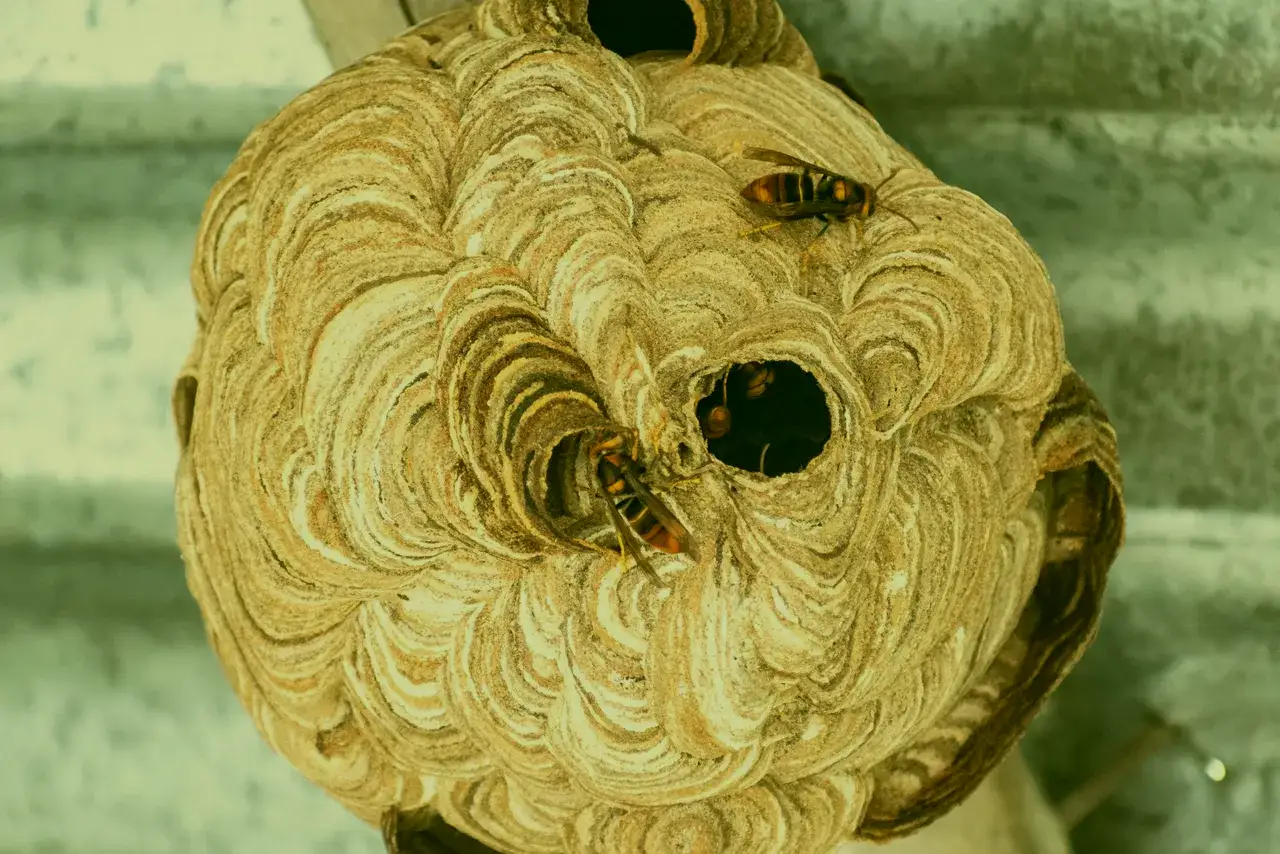
An inspection identifies the insect and finds the nest before anything is treated: paper wasp, yellowjacket, baldfaced hornet, mud dauber or honey bee. Honey bees go to a beekeeper, not this line. When you are not sure what is nesting, this is the place to begin.
View service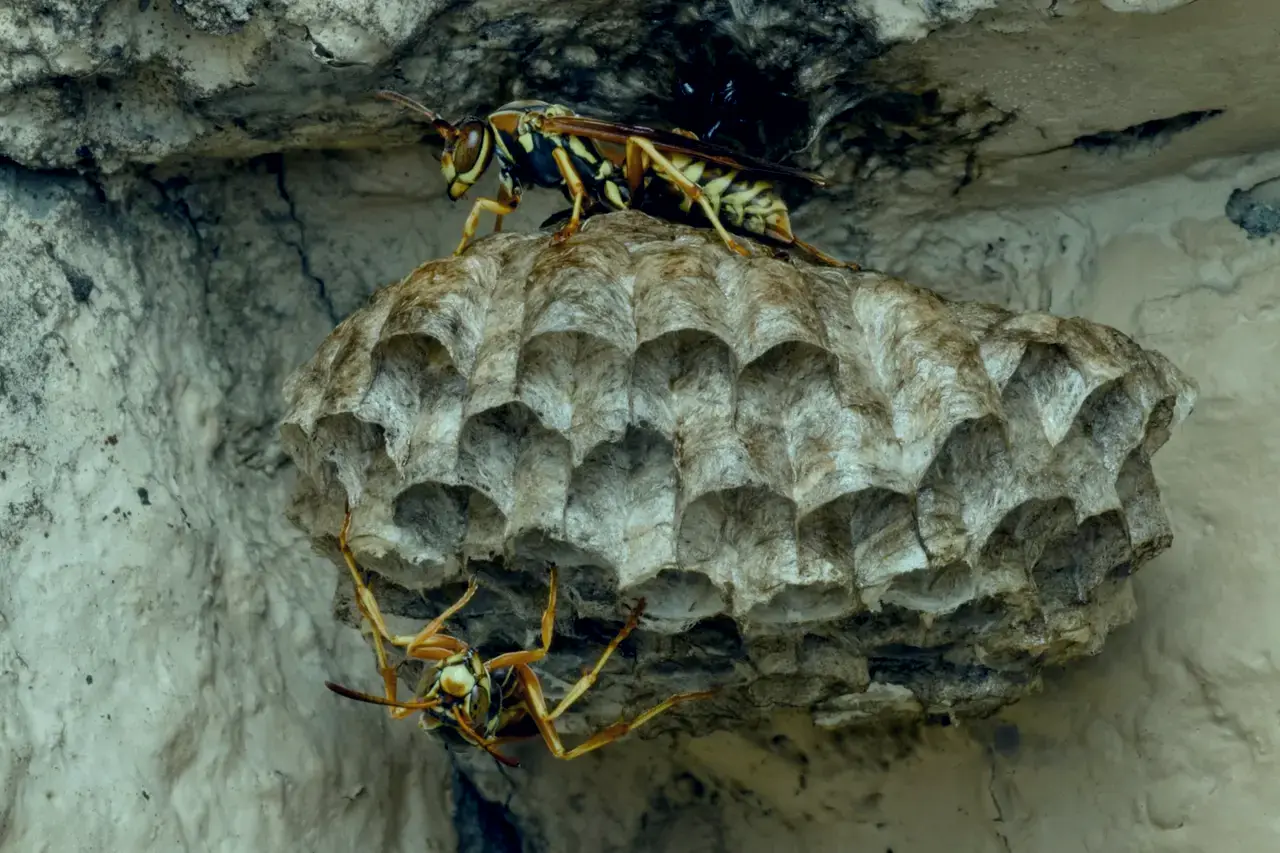
The baldfaced hornet is the only 'hornet' known in Texas and is actually a yellowjacket. Its enclosed paper nests hang in trees, shrubs or under eaves, and a return check confirms the colony is gone before the nest is taken down.
View service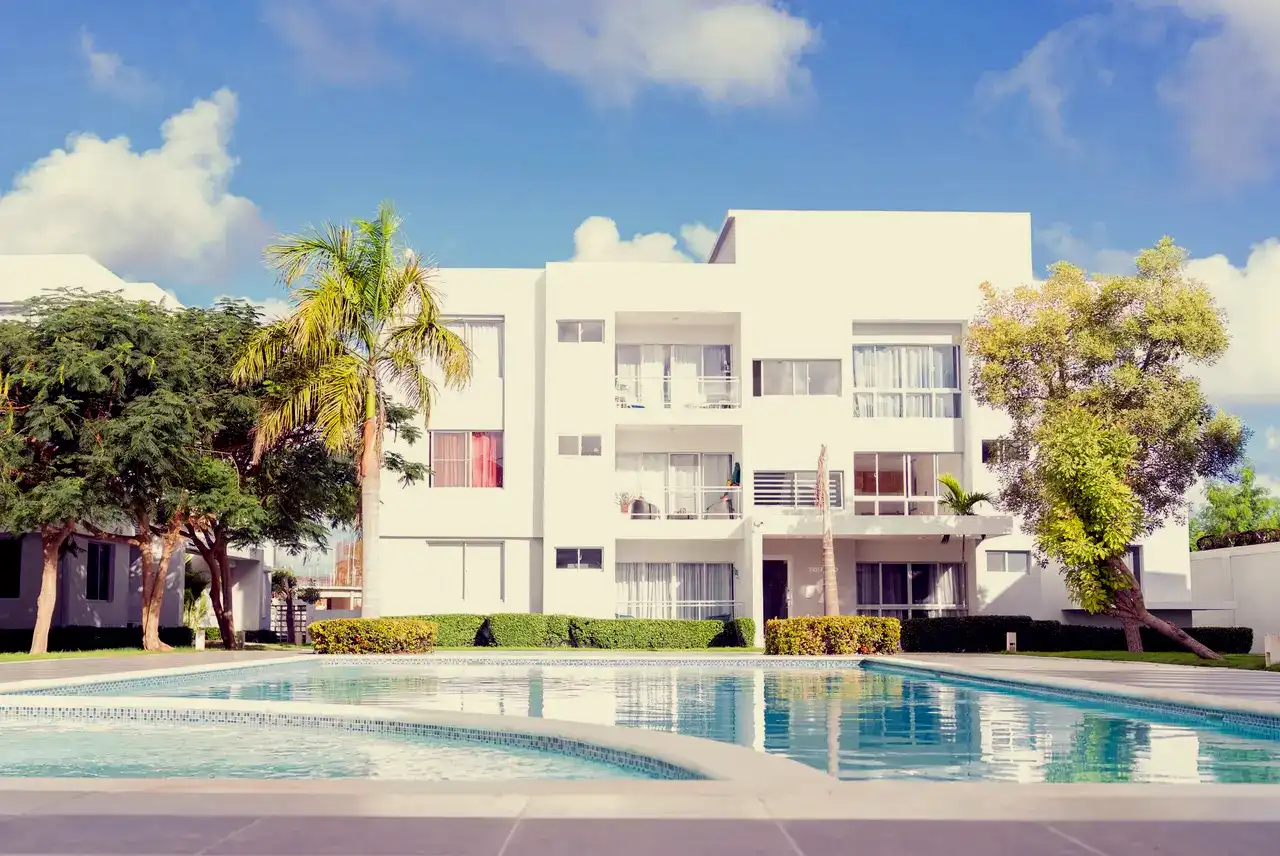
Yellowjacket nests are mostly underground but can sit in wall voids or under eaves. A wall entrance should not be sealed until the colony has been eliminated, which is why a return check matters with these nests: it confirms the colony is gone before the gap is closed.
View service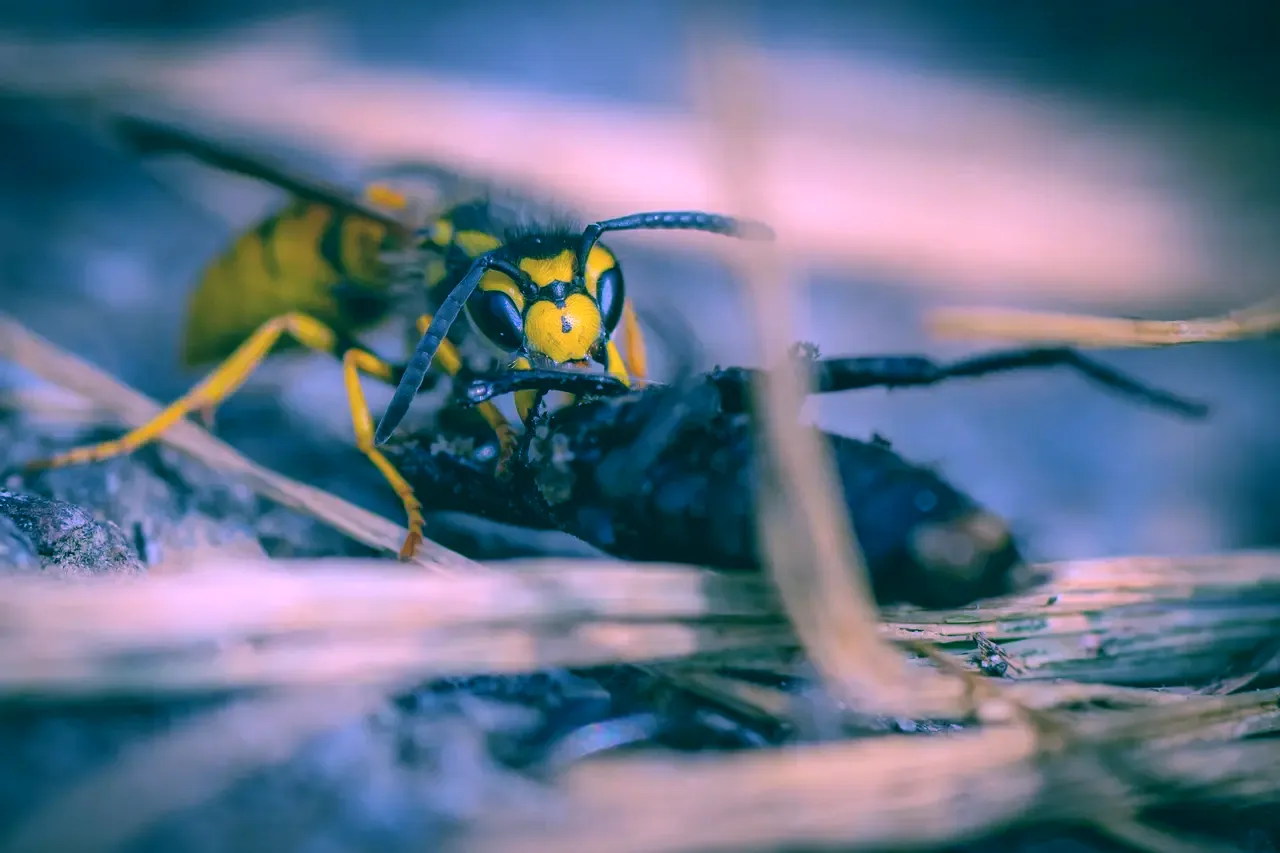
Apartment work covers townhomes and larger buildings, where wasps nest under balconies, breezeways and soffits. Tenants report to the manager, and the manager arranges access to common areas and outside walls. With 40.0 percent of Lewisville's units in buildings of five or more, one missed nest can affect several neighbors.
View serviceDial the number above and a call-tracking service puts you through to an independent provider that works in Lewisville; the call may be recorded. Calls are connected 6 a.m. to midnight Central Time (7 a.m. to 1 a.m. during daylight saving time). Timing and cost are agreed between you and the provider.